So Far Away

In September 1861, Enoch Galusha Howard was living in Tioga County, Pennsylvania with his wife, Henrietta, and their five children.  Perhaps he still resided in the same house in the town of Middlebury, where he was enumerated in the 1860 Census, and still made his living as a wagon maker.  His three older children no doubt were attending school and Henrietta was kept busy with a newborn baby and a three-year old.

But the nation was in turmoil, embroiled in the early stages of a civil war.  Enoch – together with several other men from Tioga County – answered the call for volunteer soldiers and joined the Union Army, serving in the 45th Regiment of Pennsylvania Volunteers.  He mustered in as First Lieutenant of Company H on September 18, 1861.[i]

After being organized and trained, the men of Company H were sent to Otter Island, South Carolina in December 1861 where they kept busy with four other Companies repairing Fort Drayton, constructing new buildings, and practicing drills.  They left Otter Island on May 21 and on June 9 the Regiment reached James Island, having marched through intense heat with no water to drink and then relentless rain. Upon arriving at James Island, a number of men from Companies H and I were sent out “on picket” toward Secessionville where they had their first engagement with the Confederate Army. Enoch was in charge of the men from Company H who were part of this detachment. [ii]  

It was on James Island where Enoch had his first bout with rheumatism, a condition which would disable him. One of the young men in his Company, William B. Gee, later provided an affidavit in support of Enoch’s claim for a pension, and gave this account: “That Enoch G. Howard…was attacked with rheumatism from severe exposure before and after the picket fight at James Island to such a degree that he was unable to perform any military duties and remained in a disabled condition up until the time he left the Regiment.”[iii]  William later added this to his statement: “I was in the fight with him.  He appeared well the day [of] the fight.  But the next morning he could not get out of the tent without help.”

I imagine James Island, South Carolina must have felt so very far away from Tioga County, Pennsylvania to Enoch at this point. He was treated at a field hospital and the Regimental Hospital at Port Royal, South Carolina.[iv] Later he was granted a 20-day leave of absence “on account of ill health.”[v] He was subsequently discharged (or resigned) and returned home to Pennsylvania and his family.  Although he recovered sufficiently to re-enlist with Pennsylvania’s 11th Cavalry in 1864, eventually serving as Bugler to Company C, chronic rheumatism plagued him for the remainder of his life.

Ninety-five years after Enoch served in the military at James Island, his great, great grandson Gilbert Walt (my father) would serve in the U.S. Air Force in Korea.  Dad took this picture of the welcome sign at Hickam Air Force Base in Hawaii, a stop on the way to Korea.
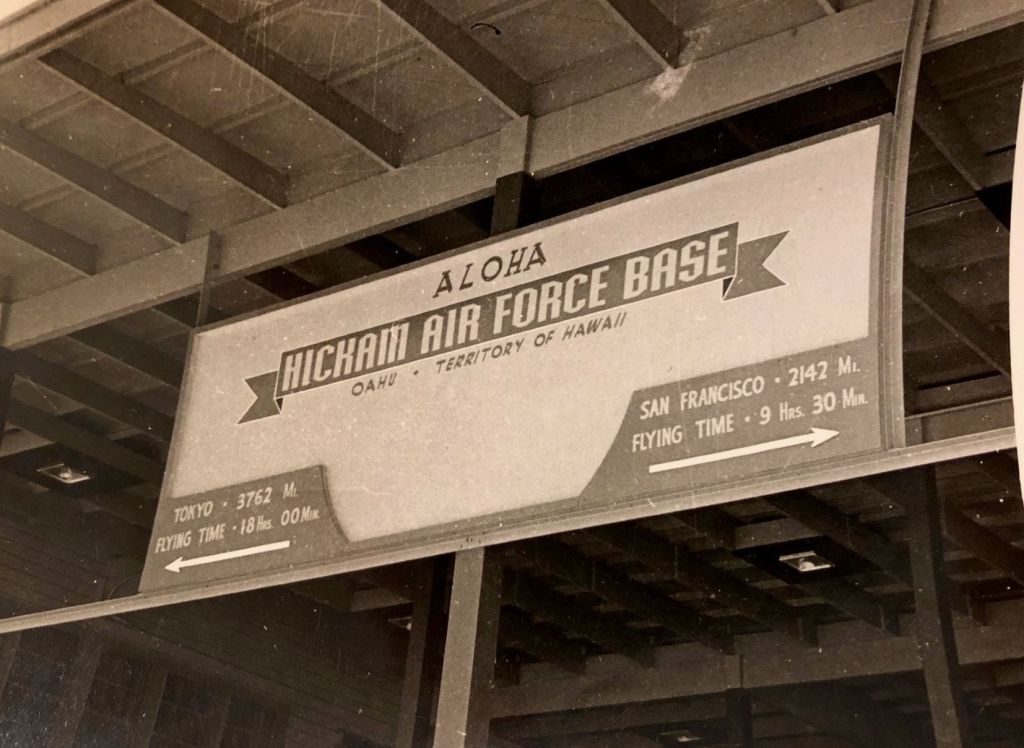

On the back of the picture he totaled up the miles from Tennessee – where he had been stationed at McGhee Tyson Air Force Base and had just left his new bride – to Korea:

  • 2500 miles from Tennessee to California
  • 2142 miles from California to Hawaii
  • 3762 miles from Hawaii to Tokyo
  • 500 miles from Tokyo to Korea

He summed up his feelings about the distance like this:
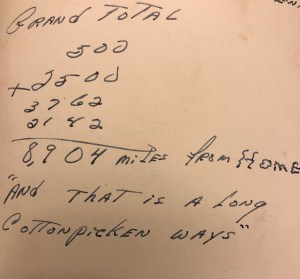
So far away.
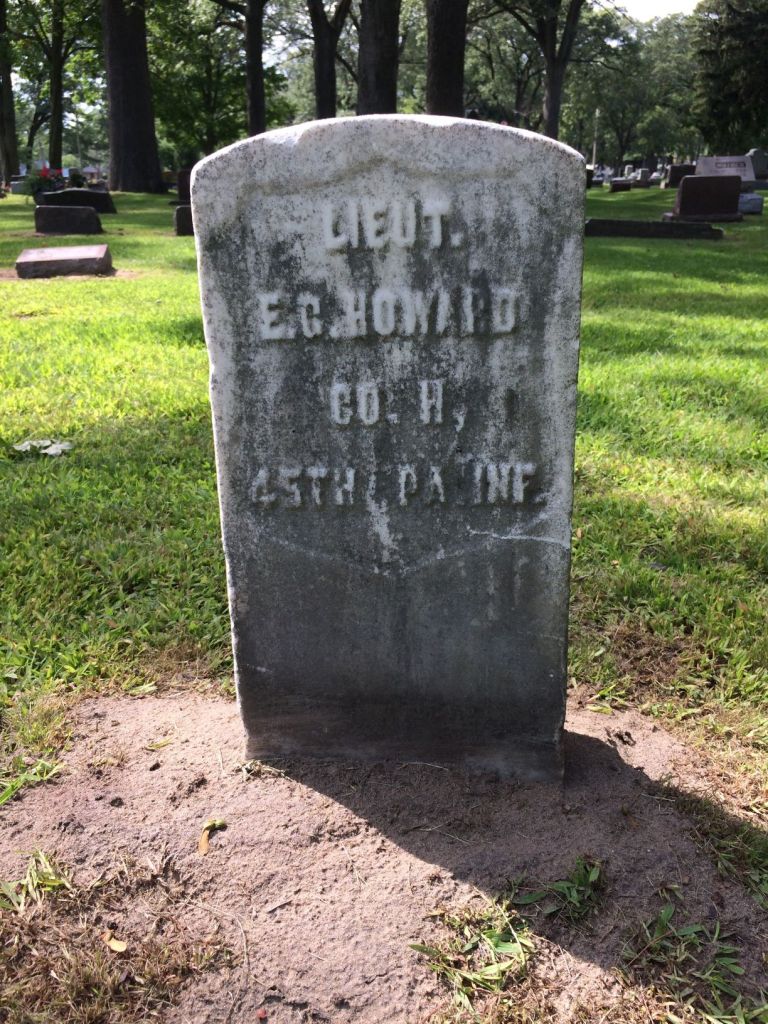
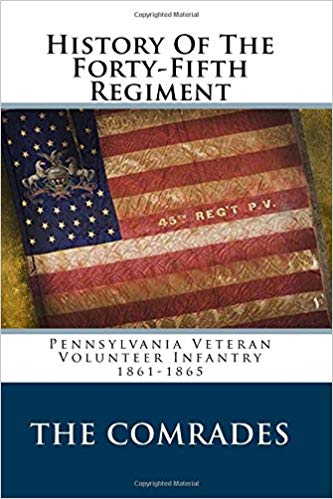
[i] A wonderful book, titled History of the Forty-fifth Regiment Pennsylvania Veteran Volunteer Infantry, 1861-1865, gives this account of the organization of Company H:  “Company H of the Forty-fifth Pennsylvania Volunteer Infantry was organized at Tioga, Tioga County, Pa., September 18, 1861, with E.G. Scheiffelin as captain, E.G. Howard as first lieutenant, R.H. Close as second lieutenant, and L.D. Seely as orderly sergeant.” History of the Forty-fifth Regiment Pennsylvania Veteran Volunteer Infantry, 1861-1865, page 269, https://babel.hathitrust.org/cgi/pt?id=uc1.b4506882&view=1up&seq=319 accessed February 3, 2020.

[ii] See pages 37-46 of the above-referenced book for a first-person account of the 45th PA Regiment’s time in South Carolina.

[iii] Affidavit of William B. Gee dated February 5, 1880, part of the Civil War Pension File of Enoch G. Howard.

[iv] Declaration for Original Invalid Pension filed by Enoch G. Howard

[v] Extract of Special Orders of Major General D. Hunter dated July 7, 1862 and a part of the above-referenced Pension file.
Close to Home


“The Review is pained to announce the fatal termination of the illness of Geo. F. Howard, station agent at West Harrisville.”

With these words, I began to read about my great, great grandfather, George Francis Howard.[i]  I was in the Alcona County Library in Harrisville, Michigan, where they have a marvelous local history room. The death notices appearing in the 1877 to 1899 editions of the Alcona County Review are digitized and available to read on the computer there.  (A kindly library worker had pointed this out to me after he saw me scrolling through reels of microfilmed copies of the newspaper.) Earlier in the day I had been to West Lawn Cemetery and visited George’s grave.  I had also been to the Alcona County Clerk’s office and obtained a copy of his marriage certificate to his second wife, Flavia Apsey.  And now I was reading the announcement of his death, which appeared in the January 17, 1895 edition of the Alcona County Review.  It continued:

“His death occurred Friday night after an illness of less than a week from pneumonia. The funeral occurred Sunday afternoon, when the remains were brought to Harrisville through the fierce storm that was raging and placed beside those of his late wife. Deceased was upwards of 45 years of age and possessed many sociable qualities that attracted friends and made him a favorite.  He had excellent habits, was attentive to business and was rarely absent from his post of duty.”

As station agent in West Harrisville, Michigan, George would have been the person in charge at the train depot.  A pamphlet I picked up that was put out by the Alcona Historical Society told a little about the Lincoln Depot, which is one of three museums the Society runs.  (West Harrisville was renamed Lincoln in the late 1890s thus the depot became known as the Lincoln Depot.) According to the Historical Society the Depot was built in 1886 and began operating in 1887.  I was learning a little more about my great, great grandfather – apparently he was a responsible employee of the railroad and well-liked in his community. 

I continued reading:

“The Review feels a personal loss in his demise.  He was one of those rare individuals who, actuated by no other motive than an inborn liking for the work, assumes the task of collecting the news of his neighborhood for the local paper, without hope or expectation of reward.  He had been the regular correspondent of the Review from West Harrisville for several years and his contributions, which appeared under the signature of “H.O. Ward,” were frequent and very acceptable.  He was of a bright and cheerful disposition, and the “copy” he sent in was always free from personalities and captious criticism.  His copy now goes to a higher power, where the proof reading will be more exact and the reward more adequate. Peace to his ashes.”

So…my great, great grandfather was also a correspondent for the local newspaper.  Having majored in Journalism in college, that bit of information hit a little close to home for me.  I wondered briefly if he had a penchant for research and writing and had passed that trait along to me somehow.  But then it dawned on me that articles George had written for the Alcona County Review were on the microfilmed copies of the paper I had been struggling to read earlier – just waiting for me to find them! The hunt was on as I headed back to the drawer full of boxed reels and the microfilm machine.  It wasn’t long before I was rewarded.

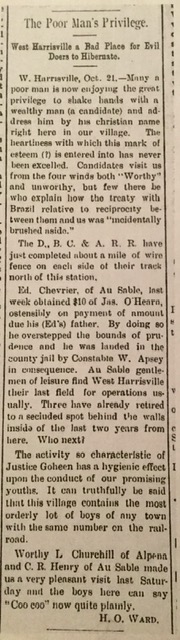
This was one of my great, great grandfather’s submissions to the Alcona County Review, appearing in the October 25, 1894 edition.  His commentary covered a variety of topics: politics (1894 was an election year); international trade agreements (after some research I learned that the 1891 reciprocity agreement between the U.S. and Brazil was deemed “terminated” by the Tariff Act of 1894);  improvements to the local railway; and crime in the area.

I have been unable to determine who “Justice Goheen” was or how he influenced the young men of West Harrisville to behave themselves.  However, I was able to find out a little information on the others mentioned in the article.  Worthy L. Churchill was the 1894 Democratic candidate for U.S. Congress from Michigan’s 10th Congressional District (notice the reference to a “Worthy” candidate in the first paragraph). C.R. Henry was a prominent attorney from Alpena.  I am uncertain, though, what Great, Great Grandfather George meant when he referred to the local boys being able to say “coo coo” as a result of the two men’s visit to West Harrisville.

George submitted several articles to the Review and in fact I need to go back to the Alcona County Library and copy more of them.  I have no doubt they will offer greater insights into his  life in West Harrisville and his personality. 

But for now, I’ll be content with the information I have, including this death notice posted from the new West Harrisville correspondent which appeared in the same edition of the Alcona County Review as the article announcing his death:

“Station Agent G.F. Howard, one of West Harrisville’s most honored citizens, departed this life Friday evening, Jan. 11, 1895.

“A feeling of sorrow, which has not been equaled in this place for many years, is caused by the sad and untimely death of Mr. Howard, who had gained the confidence of all who knew him.

“The subject was born in New York City and had passed his forty-sixth birthday.  He had been a resident of this state for twenty-nine years and during this time had been constantly engaged by the R.R. Co.  He has been the station agent at this place since ’89; was married to Flavie Epsey in ’91, which happy union only lasted one year and a half when she was called away by death.

“Mr. Howard united with the Baptist church soon after he located here and has done much toward the interests of the church and village.

“Funeral services were conducted on Sunday at 1 o’clock p.m., the pastor of the church officiating.  Two of his brothers, L.A. Howard of Detroit and “D.” Howard of Alpena, arrived here not long before his death and remained until after the funeral.  Notwithstanding the stormy day a large number of people attended the funeral services.  The remains were interred in the Harrisville cemetery.

“The writer can scarcely realize that he is gone.  He leaves a host of friends to mourn his loss.  When at the close of his eighth day’s suffering the veil grew thin which separates time from eternity and he quietly passed away.[ii]                                                                                                 W.C.R[iii].”

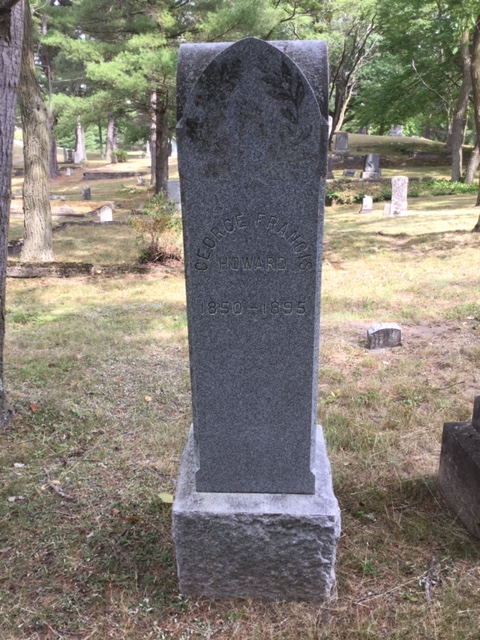
George Francis Howard’s grave marker, West Lawn Cemetery, Harrisville, Michigan

[i] George was born in 1850 to Enoch Galusha Howard and Henrietta Walling Howard.  He married Sarah Flewelling and they had four children:  Frank Fayette; Elbe; Clinton Dewitt; and Etta Agnes.  Etta Agnes was my great grandmother, my paternal grandfather’s mother.

[ii] A few discrepancies I noted:  George was probably only 45 years old at the time of his death; he married Flavie Apsey on November 8, 1890 according to their marriage certificate on file at the Alcona County Clerk’s Office; George’s surviving brothers were Lucien, Lafayette, and Galusha – “D” Howard may refer to Galusha, who probably resided in Alpena at the time of George’s death. A Card of Thanks from the Howard family which appeared in the January 17, 1895 edition of the Review was signed by L.A. Howard, Detroit and G.A. Howard, Alpena.

[iii] I’m still trying to figure out who the writer might have been.


Long Line

This week’s prompt is “long line.” It pretty much had me stumped as far as story ideas.  I thought about some long family lines I’m aware of – I read an article once that suggested Shakespeare may have referenced the Flewelling family in one of his works.  That would certainly be a long way back for that family line.  And I thought of some family lines that are no doubt very long but which I am stuck on because I can’t get past a certain ancestor (the Howard line, for example).

However, as I pondered the phrase “long line,” trees came to mind.  Not family trees, but real trees.  I tried to dismiss the idea as a bit strange but it kept coming back again and again. A long line of trees… So my post this week is about trees in Northern Michigan – beautiful trees there now and trees my grandfather captured on film almost 100 years ago.

In Ogemaw County, Michigan, where I was raised, there are lots and lots of trees.  I grew up surrounded by them.  Birch trees with their white bark are perhaps my favorite. 

Birch trees in a wood near where I was raised.

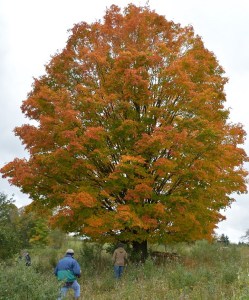
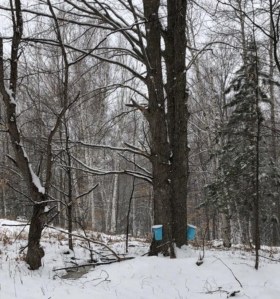
But a beautiful maple in the Fall can be breathtaking. And also supplies precious sap for making maple syrup in the Spring.

Majestic maple. (Photo credit: my brother Bill)
Sap buckets on trees on my brother’s land near Rose City.
Spring in Northern Michigan!

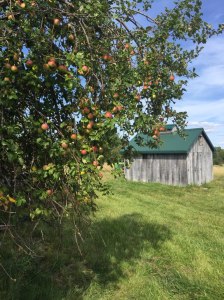
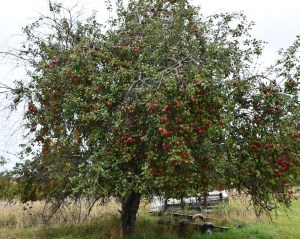
  Apple trees loaded down with fruit are a wondrous sight.

Apple tree on my brother’s land.
(In the background is the Sugar Shack where we boil sap for syrup.)
A bumper crop of apples. (Photo credit: my brother Bill)

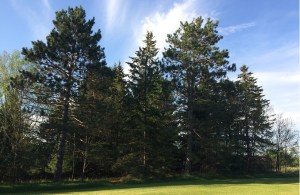
Pine trees are so prevalent there that they might be overlooked, but who can resist stopping to listen to the sound of the wind moving through them?

Pine trees edging the lawn of my grandparents’ house on Schmitt Road.

My paternal grandfather, Lewis Bruce Walt, was born in 1904 in Rose City, Michigan. His father died when he was nine years old and a baby sister passed away a month later. His mother, Etta Agnes Howard Walt, eventually remarried.  My grandfather, together with his two younger brothers, Howard and Burt, lived on Schmitt Road in Cumming Township (just outside Rose City) with their mother and stepfather.

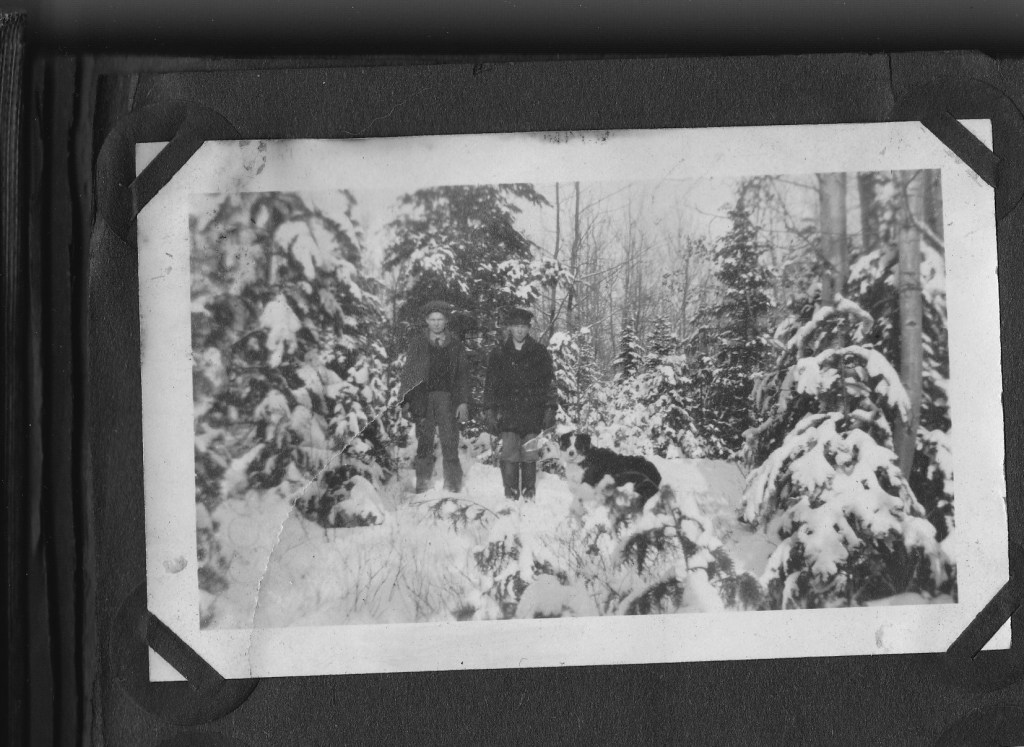
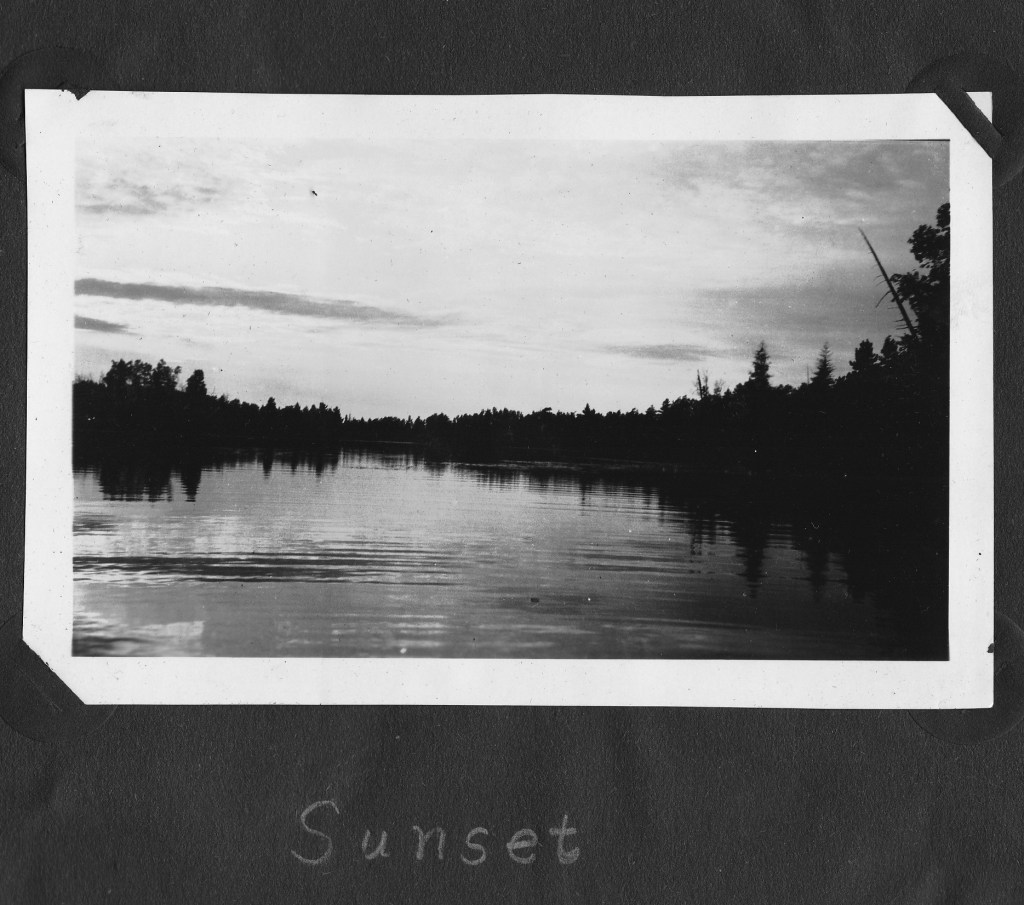
When Pappy – as my brothers and I called him – was around 20 years old, he had a camera and used it to take several pictures of family, friends, and Northern Michigan scenery.  At some point, he carefully arranged the pictures in a photo album and labeled several of them.  When I flip through his photo album now, I see the landscape of my home as it was in 1924 or 1925.  The snow, the rivers, the lakes.  And the trees.

Trees laden with snow.
My Great Uncle Burt (L) and Great Uncle Howard (R), January 1924.
Tree-lined water.
My grandfather probably took this picture around 1925.
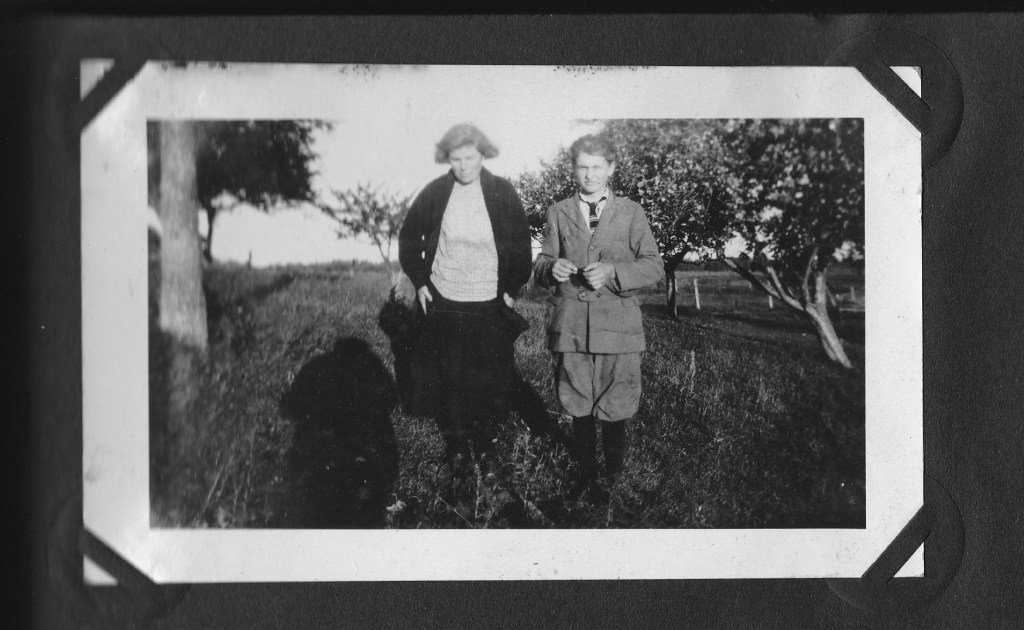
My great grandmother, Etta Agnes Howard Walt Waterman, and my great uncle, Archie Burt Walt.
Probably taken in 1924 or 1925.

Although my grandfather moved away from Ogemaw County for a period of time, he returned in the mid-1940s to make his home on Schmitt Road with his wife and son, my father. He remained there the rest of his life.

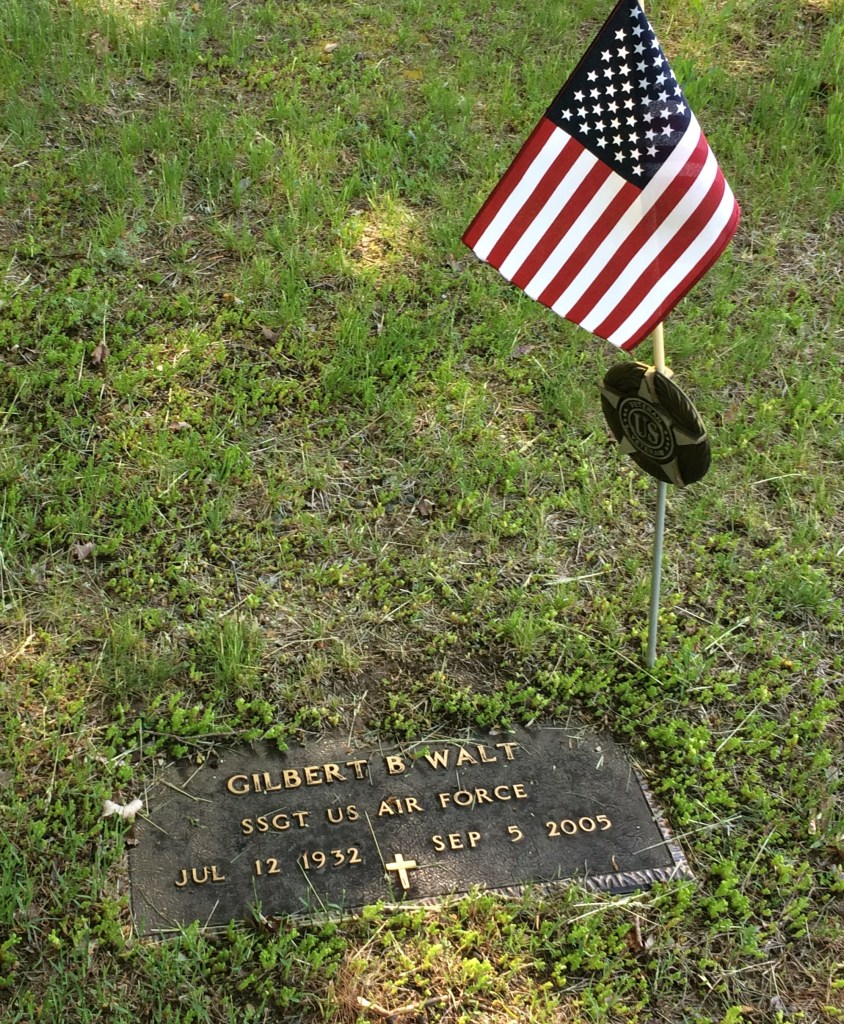
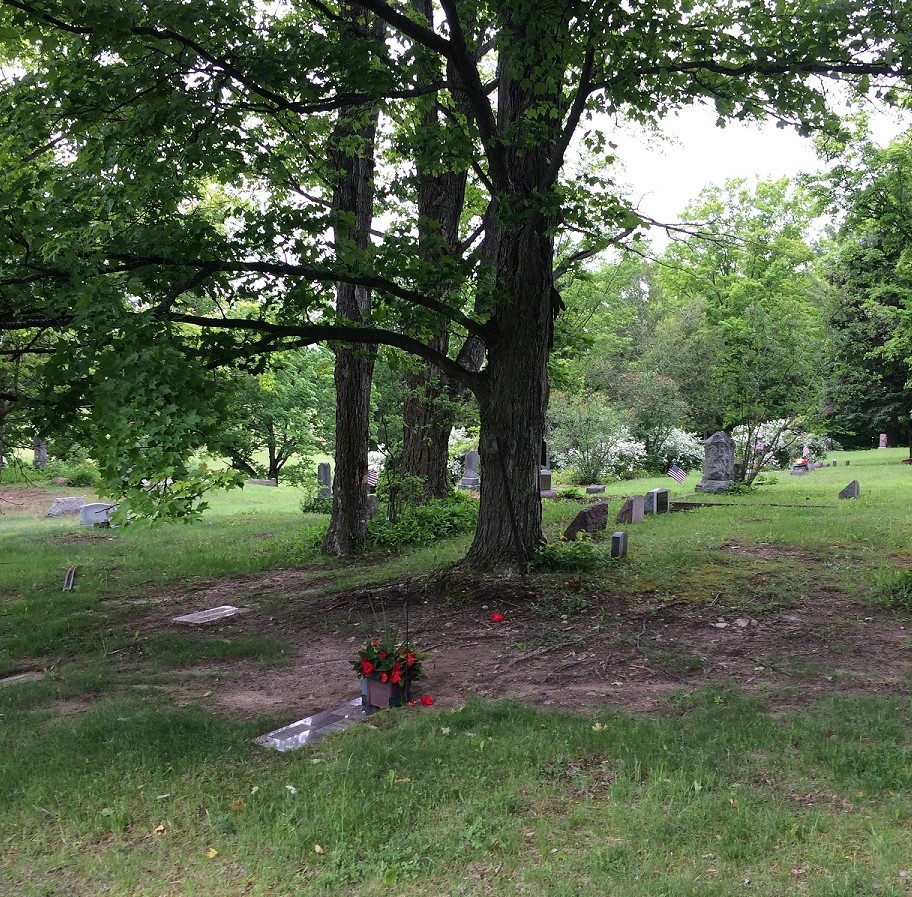
In 1975 my grandfather passed away. He is buried in Lane Heights Cemetery in Lupton, Michigan. In the shade of a beautiful old tree.

My grandparents’ grave site (with flower pot).
Lane Heights Cemetery, Lupton, Michigan.

Favorite Photo

Sometimes I think my favorite photo is the one I haven’t found yet.  How exciting would it be to find a picture of Enoch Galusha Howard, one of the ancestors I wrote about in Week One, in his lighthouse keeper’s uniform? I don’t know much about my great grandfather Andrew Marshall Walt – it would be wonderful to find a photo of him with his parents. Yesterday I checked out of the library a digital scanner that will allow me to scan all the slides I have from years ago and save them to my computer.  Perhaps my new favorite photo will be among the pictures in that collection.

But for now, my favorite photo isn’t special because of the photo itself necessarily – although it is a wonderful, old picture of an ancestor.  It’s special because of the way it came to me and the bonds of family connections it reminds me of.

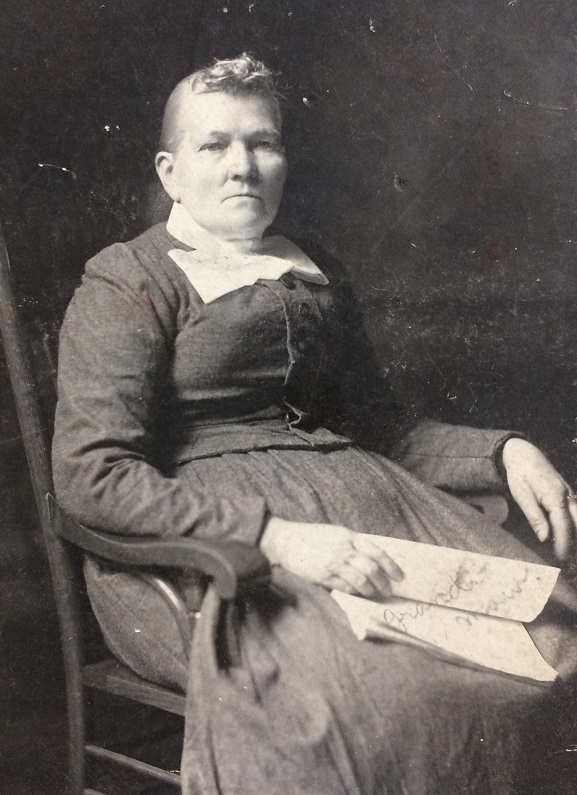
Sarah Flewelling Howard Hawley

The subject of the photo is my great, great grandmother, Sarah Flewelling Howard Hawley.  An imprint at the bottom of the cardboard frame around the picture indicates it was taken at “Deery Art Hall Port Huron.” I did a quick Google search and found that Deery Art Hall in Port Huron, Michigan was a studio in existence from 1899-1901.[i] So my tentative conclusion is that Sarah was around 32 years old when the picture was taken.

I had been researching Sarah a long time before I was given her picture.  I knew that she was born in New Brunswick, Canada in 1858 to Abel Flewelling and Ruth Elliott Flewelling, the first of their nine children (as far as I can tell).  The Flewellings moved their family to Port Huron, Michigan when Sarah was around seven years old and it appears that Sarah was still residing there when she married George Howard on October 16, 1877.  Thereafter, she and George lived in Alpena, Michigan.  Sarah had four children with George – Frank Fayette, Elbe, Clinton Dewitt, and my great grandmother, Etta Agnes.

However, shortly after Etta Agnes was born in 1885, Sarah left George.[ii]  The 1900 Census seems to indicate that Sarah apparently divorced George and married Charles Hawley.  At the time of that census Sarah and Charles resided in Ogemaw County, Michigan with five children born to them along with Sarah’s children Dewitt and Agnes.

Sarah endured her share of troubles in life.  A three-month-old child died in 1900.  Her husband Charles left her and their children sometime between 1902 and 1910, no doubt causing her a great deal of economic insecurity.[iii] She died in 1936 during an extreme heat wave. Her obituary, appearing in the July 23, 1936 Ogemaw County Herald, said “Everyone who knew her will miss her kindly face in their midst.”[iv]

But what really makes Sarah’s photo a favorite of mine is how I got it.  Two summers ago I spent a few weeks in my hometown of Rose City, Michigan to do some family history research and was fortunate enough to get to meet one of my dad’s first cousins, Patty.  She came over to the house where my grandparents had lived (where I was staying) and brought with her two large photo albums. As we paged through one of the albums, Patty told me about the people in the pictures.  Some were from her dad’s (and my) side of the family, the Walts, and some were from her mother’s side.  When we got to the picture of Sarah, neither one of us knew who she was.  Patty took the picture out of the album and turned it over.  On the back was written “Grandmother Hawley.”[v] I was momentarily speechless. There she was, Sarah Flewelling Howard Hawley – my great, great grandmother.

Patty saw how much it meant to me to see the photo and promptly said, “Here, take it.” At first I demurred – it was part of Patty’s family album and taking a picture of the photograph would be sufficient for me.  But she handed it to me, insisting I take it. My heart was warmed, not only by seeing a picture of the woman I had done so much research on but also by the kindness of a cousin I had just met.

The photo of Sarah became one of my favorites not only because it revealed the face of an ancestor whose life I had been tracing. It became one of my favorites also because it reminds me of making family connections, of meeting a cousin and experiencing her generosity.  I think of Patty each time I look at the photo.

And now I have a request of all of you reading this post.  If you have a favorite photo, please tell me about it in a comment below.  If you can upload the picture in your comment, great! But if not, just a brief description of the photo and why it means so much to you would be super. I am looking forward to seeing or reading about your favorites!


[i] https://clements.umich.edu/files/tinder_directory.pdf

[ii] In 1910 Etta Agnes wrote a letter to the Alcona County Probate Office requesting information on her father George’s estate.  She wrote, “You see, as I am the younger of the four children I do not remember my father, for I suppose you know my mother left him, and I was only about 6 months old or there about.”

[iii] The Ogemaw County land records show the sheriff sold property belonging to Charles (presumably where the family lived) at a foreclosure sale and also levied against the property to satisfy a judgment against Charles. Sarah purchased the property back at the foreclosure sale.

[iv] Perhaps the expression on Sarah’s face in this photo is not the one she wore on a regular basis.

[v] Sarah was Patty’s father’s grandmother. We surmised that either Patty’s mother or her father had written “Grandmother Hawley” on the back of the picture.

Fresh Start

The first theme in the 52 Ancestors in 52 Weeks challenge is “fresh start.”

As I’ve researched my ancestors through the years, I’ve noticed that some of them moved around a lot.  And I wondered – was each move a fresh start for them?  Did they have high hopes for a better life each time they pulled up stakes and set their sights on a new location?

My third great grandparents, Enoch Galusha Howard and Henrietta Walling Howard, bring to mind these questions as I’ve traced their migration from New York to Michigan.  Born in the 1820s, their early years have proven to be a bit elusive to track down.  However, beginning with the 1850 census I can start to piece together a picture of Enoch and Henrietta’s lives.

In 1850, 28-year-old Enoch and 24-year-old Henrietta were living in New York City in the 9th Ward[i] with their two children, Lucien and David.  Enoch (or E.G. as he apparently preferred to be called) was working as a carpenter. Two other families resided in the same dwelling house with the Howards, and Henrietta’s younger sister, Jane Walling, lived with them as well.[ii]

By the time the 1860 census was taken, Enoch and Henrietta were living in Middlebury, Tioga County, Pennsylvania, some 250 miles west of New York City.  That census reports that their family had grown in the intervening 10 years.  Son George and daughter Elizabeth were born to the couple before they left New York.  Two-year old Lafayette came along after they had settled in Pennsylvania.  However, it appears the family had also diminished – their son David, who would have been approximately 12 years old in 1860, was no longer listed as a member of the household.

This census indicates Enoch worked as a “Waggon Maker” and owned real estate worth $200 and personal property worth $150. Lucien (age 13), George (age 9), and Elizabeth (age 7) all attended school. It appears from the record that the family lived in a single-family dwelling at this point.

What brought these ancestors to Pennsylvania, I wonder. Were they seeking more space, a quieter environment than New York City? Was extended family living close to where they moved? Assuming David died in New York, did they want to leave behind the sadness that would have undoubtedly overshadowed their lives because of this loss?  Were they seeking a fresh start?

In the Fall of 1861, Enoch joined the Union Army, serving with the 45th Regiment of the Pennsylvania Volunteers.[iii] In 1862, he fell ill at James Island, South Carolina and was eventually discharged.  Although he recovered sufficiently to re-enlist in the Cavalry in 1864, he apparently never fully recuperated from his illness.  In 1879 Enoch applied for pension benefits from the U.S. government, stating he was disabled from “chronic rheumatism caused by exposure in wet” at James Island.[iv]

In Enoch’s application (or “Declaration”) for pension benefits, he listed all his residences from the time he enlisted in the Army until the date of his application. In a General Affidavit dated October 5, 1880, he gave more detail regarding the dates of his addresses:

That for five years immediately preceding my enlistment I lived in Middlebury Tioga Co Pa and since my final discharge I lived in Tioga Tioga Co Penna untill July 1867 and at Marine City Michigan untill July 1868 and since then untill the present time at Alpena Alpena Co Michigan.[v]

In one sentence, Enoch gave the parameters of four moves the family made.  They had lived in Middlebury since 1856.  After Enoch’s discharge in 1865 they moved to a different location within Tioga County, PA and stayed for another two years.  At this point, were they putting down roots, making a life for themselves in the area? Or perhaps there was a feeling that better things awaited them elsewhere. Whatever the reason, in 1867 the family left behind their home of 11 years and headed westward again.  It was time for another fresh start.

Marine City, Michigan is located approximately 20 miles south of Port Huron in St. Clair County.  Depending on the route they chose to get there, the Howard family may have traveled anywhere from 370 miles to 520 miles.  At the time they arrived, lumber and shipping were the primary enterprises of the City.  Were they drawn to the opportunities of the area? Were family members nearby? Was Enoch, a musician and bandleader, attracted to a city where bands played during the summer at a bandstand at City Hall?[vi]

Just one year later, in July 1868, Enoch, Henrietta, and at least three of their five living children headed north a distance of some 260 miles to settle in Alpena, Michigan. Census records and city directories seem to indicate that the Howards remained in Alpena for approximately 20 years, putting down roots in the area. Enoch was the first keeper of the Alpena lighthouse[vii] and was leader of the Germania band there. Two of the Howard children, George and Elizabeth, married spouses and settled nearby, remaining there for the rest of their lives.  The familiar questions run through my mind. What brought the family to Alpena? Did another fresh start beckon?

In 1888 or 1889, Enoch and Henrietta headed west for the last time, crossing the state of Michigan to make their home in Muskegon, where their oldest son Lucien resided. Henrietta died there on August 12, 1890.[viii] Enoch passed away two years later.  I imagine this couple, married for over 40 years, saw this final move not so much as another fresh start but rather as the first step on the final leg of their journey together.

Sometimes I marvel at the impact of Enoch and Henrietta’s fresh starts. They brought one line of my family to Michigan and are part of the reason I – and many, many of their descendants – call the Great Lakes State home.


[i] Specifically, the 3rd District of the 9th Ward, which appears to be in the area of modern-day Greenwich Village and Hudson Square.

[ii] Baptismal records from the Dutch Reformed Church in Schraalenburgh, New Jersey reveal that Henrietta Walling (Howard) and Jane Walling were born to the same parents, John J. Walling and Jane Demarest, six years apart.

[iii] The Howards’ oldest son, Lucien, joined at this time as well, mustering in as part of the Band of Company I of the 45th Regiment.

[iv] This information is taken from a copy of Enoch’s Civil War Pension File I received from the National Archives.

[v] I have attempted to transcribe the Affidavit exactly as it was written, including abbreviations and misspellings.

[vi] Marine City, Michigan in Wikipedia, accessed January 4, 2020 https://en.wikipedia.org/wiki/Marine_City,_Michigan

[vii] See http://www.terrypepper.com/lights/huron/alpena/keepers.htm for a history of the lighthouse and a listing of keepers.

[viii] Find-a-Grave reports that Henrietta died in Alpena but I have not been able to substantiate this. It occurs to me as I write this that perhaps Henrietta stayed in Alpena and didn’t move to Muskegon with Enoch. Something new to research!

A little background…

My blog posts will be based on themes provided by Amy Johnson Crow’s 52 Ancestors in 52 Weeks challenge. Each week Amy provides a different writing prompt for people to use to write about their ancestors. The first prompt, for example, is “fresh start.” So my first ancestor story will be based on this theme.

At some point I hope to add a family tree to show the relationships between all the people I’m writing about. Until then, let me know if you need clarification about who fits in where!

Update Feb 12, 2021: The 52 Ancestors in 52 Weeks challenge I was following ended in December 2020. Posts after that do not follow any prescribed theme or writing prompt.

Design a site like this with WordPress.com
Get started